
Carbon Markets
ClimateTalks: Let’s Meet Cercarbono
In this episode of ClimateTalks we meet Cercarbono, a voluntary carbon certification program that facilitates and guarantees the registration of climate change mitigation projects.

In this episode of ClimateTalks we meet Cercarbono, a voluntary carbon certification program that facilitates and guarantees the registration of climate change mitigation projects.

The Biden administration is pushing for high-quality voluntary carbon markets to combat the climate change crisis.
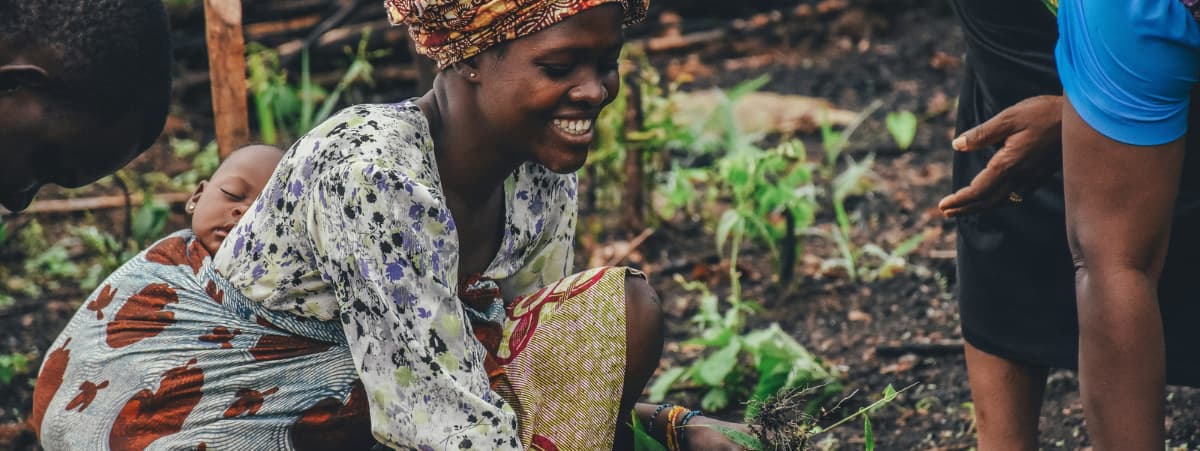
In this episode of ClimateTalks we meet Verra to discuss how they are facilitating a sustainable transition through carbon offsetting.

In this article we will explore the key differences between carbon removal vs. carbon avoidance and tell you how to choose between them.

Market clarity empowers businesses to leverage verified high-quality carbon offsets and maximize their net-zero goals. Explore how these offsets are measured and find the perfect fit for your sustainability journey.

IETA promotes carbon credits for bridging the emissions gap, but emphasizes responsible use through new guidelines for climate action.

BioUrban is a pioneering technology that absorbs carbon from the atmosphere and mitigates global warming. These 4-meter-high carbon sinks are capable of cleaning the air that 2,790 people breathe every day, or 40 tons of CO2 per year. Developed by Mexican company BiomiTech, the artificial tree is designed to be placed in spaces in the center of large cities that have high levels of pollution such as small parks, schools and hospitals. Within its structure, it contains microalgae reactors that absorb pollutant particles to feed on them and, after a natural process of photosynthesis, convert them into oxygen and biomass. The first of these artifacts has been successfully installed in Mexico, specifically, in the capital of the Mexican state of Puebla. There, BioUrban has reduced pollution levels in one of the busiest areas of the city near the university. Now, ClimateTrade has partnered with BiomiTech to bring the technology to Spain. “The most polluting areas of large cities, structurally do not allow to hold a large number of trees in their spaces, and thanks to this new technology, CO2 capture is maximized and air quality is improved. Clearly, the installation of a BioUrban device is complementary to the development of other initiatives such as urban forests, ”says Francisco Benedito, CEO of ClimateTrade. “Cities like Madrid, Barcelona or Valencia suffer from high levels of pollution. With this initiative we intend to maximize the capture of CO2 and improve the quality of the air in our cities,” he adds. This technology is a nature-based solution to climate change that will allow the creation of a new circular bioeconomy capable of producing fuels from the pollution generated by our daily activities.
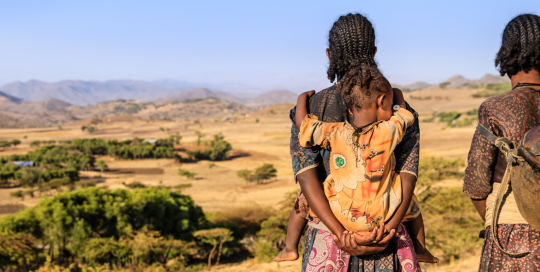
This year, the United Nations has chosen February as the month to focus on SDG 5, gender equality. In this article, we dive into a key concept connecting gender issues with climate action: gender-just climate finance.

Earlier this month in Glasgow, the Conference of the Parties finally agreed on how international carbon credits should be exchanged under Article 6 of the Paris Agreement. After more than five years of negotiations, many of the draft’s sticking points were resolved. «Transparency, justice, consensus and interdependency, these are the pillars for the successful execution of Article 6 of the Paris Agreement. Let’s keep in mind that this is arguably the most ambitious article for climate action, since it manages to involve the private sector,” comments José Lindo, Co-Founder and Head of Impact at ClimateTrade. Here are the top 3 Article 6 issues that world leaders agreed on in Glasgow, and what these decisions mean for international carbon markets. Double accounting In theory, allowing countries to fund greenhouse gas (GHG) mitigation projects abroad in order to meet their own decarbonisation targets, or Nationally Determined Contributions (NDCs) is a great way to reduce the global cost of the transition. According to the International Emissions Trading Association (IETA), an independent, industry-led organization working to create an efficient emissions trading framework, this form of international cooperation could lead to savings of US$250 billion a year by 2030, compared to individual implementation. However, there needs to be a mechanism in place to prevent the emissions reductions deriving from such projects from being claimed twice, once by the funding country, and once by the host country, where the project is implemented. Without such a mechanism, environmental groups warn that up to 30% of global emissions are at risk of double accounting. The final text, on which 200 nations agreed in Glasgow, states that the host country (the country where the mitigation project is being carried out), has the power to decide whether the credits generated should go towards its own NDCs or be sold internationally. If a credit is authorised for sale, the host country has to add an emission credit to its record, while the purchasing country can deduct one, avoiding double accounting. However, this rule only applies to mandatory carbon markets, where countries have a national carbon register and accounting system. In the voluntary market, where companies look to offset their emissions outside the remit of national targets, there is currently no supervision to avoid double accounting. Traceability in voluntary markets is therefore crucial: this is why we at ClimateTrade use blockchain technology to reliably track and trace carbon credits. “We can’t tackle the climate crisis solely from the public sector. Our marketplace allows companies and other entities to offset their carbon footprint directly by selecting the most appropriate carbon credits from projects around the world. By supporting and promoting these projects, we also provide better living conditions to their local communities and generate a direct impact on the environment, fostering the regeneration of the planet’s natural balance and helping to mitigate climate change. And thanks to blockchain technology, we can effectively guarantee that the carbon credits are cancelled in their corresponding registries, and that the money paid in the transaction goes directly to the project source,” adds Lindo. CDM integration In 1997, 84 countries signed the Kyoto Protocol, which included a Clean Development Mechanism (CDM) allowing GHG emissions trading between countries. But since the Paris Agreement, signatories argued over whether emissions reductions achieved through the CDM should be allowed to continue to generate carbon credits under the new framework. Countries that were against this provision argued that it would diminish the impact of Paris goals, whereas those that defended it said it would reduce the cost of the transition, since these projects are already paid for. The final rulebook states that offsets generated under the CDM since 2013 can be carried over to the new system. This cut-off date has been heavily criticized: according to research by Climate Analytics, it will allow a global rise in emissions of 320 million tons of CO2 — the equivalent of the 320 million offsets generated since 2013. Carbon trade tax Article 6 mentions the creation of a centralized carbon trade mechanism to replace the Kyoto Protocol’s CDM. This mechanism will be supervised by “a body designated by the Conference of the Parties”, most likely the UN. Transactions belonging to this scheme will be taxed to cover administrative costs, but also to support more vulnerable countries in their decarbonisation efforts, via the Adaptation Fund. Before Glasgow, there was a degree of uncertainty around which transactions would be taxed, as some countries were asking for the tax to be extended to any voluntary emissions transfer between countries. Doing that would have placed centralized and bilateral trading schemes on a level playing field, avoiding a preference for transactions outside the supervised mechanism. It would also have increased the proceeds available for climate financing in vulnerable countries. But in the end, the Conference of the Parties has decided that only the transactions conducted via the centrally supervised mechanism would be taxed, at a rate of 5%. More about carbon markets Carbon markets as they are now have raised doubts amongst climate activists, countries and companies, and their fears are justified if we don’t start talking about a fair price for carbon and ensuring that funds reach the right countries and their communities. The carbon market can be improved, as can government transparency and. tax systems around these transactions. As a member of the Taskforce on Scaling Voluntary Carbon Markets, ClimateTrade has participated in structuring the Core Carbon Principles. We’ve also worked on the ICC Carbon Pricing Mechanism as representatives of ICC Spain (International Chamber of Commerce). ClimateTrade is the world’s leading climate marketplace. We help companies offset CO2 emissions and we support climate-positive projects to ensure a sustainable future for our planet. In other words, we are carbon market experts. Contact us to find out more.