Carbon Markets
What is carbon sequestration?
In the fight against climate change, carbon sequestration is a key concept. This article explains what this expression means exactly.

In the fight against climate change, carbon sequestration is a key concept. This article explains what this expression means exactly.

Regulation around carbon farming is maturing, with the EU’s carbon removal regulation proposal and the U.S’ Growing Climate Solutions Act.

As our window to act becomes ever smaller, what should be the top climate change priorities in 2023?

Azolla Projects and ClimateTrade have launched a carbon farming program to generate carbon credits in the Spanish agricultural sector.
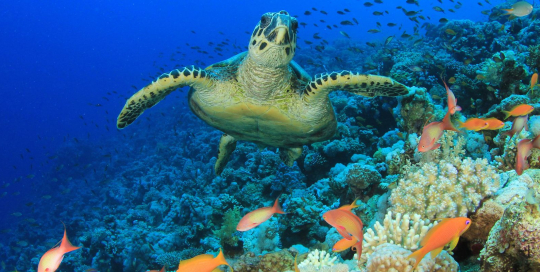
Biodiversity credits are the latest tool in the climate action arsenal – but how do they work and what is their role in relation to the carbon market? Biodiversity protection and restoration is one of the key topics at COP27 in Sharm el-Sheikh, and for good reason. Ahead of the UN Climate Change Conference, WWF revealed the catastrophic effect of human activity on biodiversity: according to the Living Planet Report 2022, wildlife populations shrank by an average of 69% between 1970 and 2018. How is climate change affecting biodiversity? Climate change has been identified as one of the most significant threats to biodiversity in recent years. Rising temperatures, changing rainfall patterns, and increased frequency and intensity of extreme weather events such as hurricanes, droughts, and wildfires are already having a significant impact on global ecosystems and the species that inhabit them. Some of the effects of climate change on biodiversity include: Range shifts: species that move to cooler climates as their current habitats have become too warm for them, leading to animal extinctions if they cannot adapt to new habitats. Alterations in migration patterns: Climate change is affecting the timing of seasonal events such as flowering, bird migration, and insect emergence. This can disrupt the delicate balance of ecological interactions and result in cascading effects throughout the food chain. Coral bleaching: Warming ocean temperatures have resulted in widespread coral bleaching, where the colorful algae that live in the coral are expelled, causing the coral to turn white and ultimately die. Changes in phenology: The timing of seasonal events, such as when plants flower and when insects emerge, is shifting due to climate change. This can result in mismatches between species that rely on each other, such as pollinators and the plants they pollinate. Why is biodiversity essential for limiting climate change? Climate change is having a profound impact on biodiversity, and we need to implement strategies to address this urgent global challenge. Reducing greenhouse gas emissions are essential in protecting the planet’s ecosystems and the species that rely on them. If the loss of animal and plant life was not tragic enough, this level of biodiversity loss is hindering our efforts to curb climate change: biodiverse ecosystems like forests, peatlands and oceans are natural carbon sinks, and their efficiency is now at risk. What are biodiversity credits? Voluntary biodiversity credits, including the ones developed by Terrasos and ClimateTrade in May and recently recognized by the World Economic Forum, are economic units representing specific actions for biodiversity protection and restoration. In the case of Terrasos, the credits were generated from the Bosque de Niebla-El Globo Habitat Bank in Colombia, with the support of XM, IDB Lab and Partnership for Forest, with each unit representing 10 square meters of land protected for 30 years. Biodiversity credits are typically created through a certification process that verifies the environmental benefits of the conservation or restoration activities. These credits can then be sold on a market to other developers who need to offset the environmental impacts of their own projects. Biodiversity credits – a new way of funding nature protection The role of biodiversity credits was discussed this week during a World Climate Summit panel on carbon offset markets and their role for biodiversity, held in Egypt alongside COP27. As one of the panel speakers, ClimateTrade CEO Francisco Benedito explained that biodiversity credits are set to allow companies, individuals and governments to go beyond carbon neutrality and become “nature-positive”. “As a former banker I was always worried about how to fund sustainable projects for people without collateral. In a renewable energy project, the collateral is the energy that is set to be produced, for instance. But for biodiversity protection projects there is no collateral. This type of unit – biodiversity credits – is a new way of funding nature protection. Because we need to put money to work to avoid further species extinction,” he noted. Beyond the limitations of carbon markets David Antonioli, CEO of Verra and the panel’s moderator, pointed out that as carbon markets have evolved, their limitations have become clearer. “For instance, to make the REDD+ (reduction of emissions from deforestation and forest degradation) work, you need a plausible imminent threat for the forest, that’s the rationale for providing carbon credits. As you get further away from those threats, these projects still provide sustainable livelihoods but because they’re not located where the threat is, they find it difficult to receive carbon finance,” he said, suggesting that biodiversity credits may be able to fill that gap. Verra itself has started to develop a framework around biodiversity credits to ensure that these units can become complementary to the carbon market. Carlijn Nouwen, Co-Founder of the Climate Action Platform for Africa, gave the example of Gabon, a country with very low deforestation rates that cannot access REDD+ creditsm but is looking to monetize the protection of its biodiverse forest. She also emphasized the need to ensure fair compensation for ecosystem services such as biodiversity conservation in the development of these credits: “As we look at paying for biodiversity and ecosystem service credits, we want to make sure we go over and above the financial recognition of carbon credits. We need to innovate with integrity and hold those two things in the right balance to make sure we get equitable compensation for all ecosystem services.” Regulation and education to push demand When it comes to the sources of demand for biodiversity credits, regulation and education are pushing more and more companies towards this offering.” We know about the Task Force on Nature-related Financial Disclosures, 40% of which is about biodiversity. This is one example of how regulation and education are pushing more and more companies to care. People are starting to see that the biggest climate threat is around biodiversity loss. In fact, in this COP I have seen more people than ever trying to get involved in biodiversity conservation,” said Benedito. As to when the biodiversity credit market will reach the maturity of the
Action and implementation are key priorities at COP27. Luckily, fast and ambitious action is our daily commitment at ClimateTrade. Here are some of the milestones we have accomplished between COP26 and COP27. This year’s Conference of the Parties is fast approaching, and with climate change accelerating, stakeholders from all spheres of society have their eyes on concrete actions. COP27’s slogan is ‘Together for Implementation’, a clear sign that it is time to put words into practice. Where to find ClimateTrade at COP27 Request a meeting with our team in Sharm el-Sheikh At ClimateTrade, we’ve always believed in actions more than in words, and one of our core values is ambition: We want to change the world and that can only be done by thinking big. As a result, moonshots are our daily thoughts. In the year from COP26 to COP27, we have taken big steps in three key areas: the promotion of transparent carbon markets, the enhancement of climate finance, and the protection of nature and biodiversity. From COP26 to COP27: Transparent carbon markets Improving the transparency of carbon markets is our core purpose here at ClimateTrade. here are three ways in which we promoted this objective over the past year: Blockchain decarbonization First, we worked with Algorand to make this blockchain network and its entire ecosystem carbon-neutral. Algorand is already the greenest blockchain network, having reduced its energy use tremendously. In December last year, we launched the Green Treasury, a blockchain oracle providing Algorand and its developer community a platform for offsetting the carbon footprint of the entire Algorand network. Since then, we have also started working with several members of the Algorand ecosystem to help them achieve carbon neutrality. We believe that blockchain technology is key to making the voluntary carbon market as transparent as possible. On blockchain infrastructure, all transactions are traceable and immutable, which means double counting is virtually impossible. But this technology comes with a heavy carbon footprint, which could easily defeat its transparent sustainability purpose. By decarbonizing the blockchain ecosystem, we make sure that transparency doesn’t cause collateral damage. Digital Measurement, Reporting and Verification In February 2022, ClimateTrade and BME concluded a successful proof of concept (PoC) for the digital certification of carbon mitigation projects. The initiative laid the bases for digitizing the verification and certification process for projects that generate carbon credits, and for adding them to national registries. Our goal with this is to make the entire process more efficient and transparent, and to guarantee the quality of the carbon credit supply. Digital Monitoring, Reporting and Verification (D-MRV) is an end-to-end solution that guarantees the authenticity and traceability of carbon credits: project developers can register their mitigation in a public and traceable way, allowing all users to verify the integrity of data. This facilitates the transparent purchase of carbon credits and their automated cancellation. International Emissions Trading Association membership Finally, we recently joined the International Emissions Trading Association (IETA). Our membership allows us to be part of international efforts to create effective and transparent market-based trading systems for carbon emissions and advance the United Nations’ Sustainable Development Goals. From COP26 to COP27: Enhanced climate finance One of ClimateTrade’s missions is to direct flows of capital towards climate change mitigation. We believe that it is necessary to shift the global economy towards a sustainable model to truly protect the future of the planet. To this end, we have taken several key actions in the past year. More than 12,000 carbon offsetting transactions To date, ClimateTrade has facilitated the offsetting of more than 3 million tons of CO2, and since COP26 alone, more than 12,000 transactions have occurred on our marketplace, directing much needed funding towards climate-positive projects. Improved marketplace We have also made design and operational improvements to our climate marketplace, which is now being used by more than 11,000 users. The more people and companies use our marketplace, the more capital will be available for sustainable projects. International expansion Finally, we have opened new offices in Miami and Seoul and participated in more than 100 events to raise awareness about the need for decarbonization worldwide. As part of this thought leadership work, we have also published four different white papers and eBooks to support companies’ Net Zero strategies. From COP26 to COP27: Biodiversity and nature protection Climate action is about much more than just decarbonization; that’s why ClimateTrade has been working particularly hard in the past year to promote nature and biodiversity conservation. Voluntary Biodiversity Credits In May 2022, we joined forces with Terrasos to commercialize Voluntary Biodiversity Credits from the Bosque de Niebla – El Globo Habitat Bank on our marketplace. Each credit corresponds to 30 years of conservation and/or restoration of 10m2 of the Bosque de Niebla, home of threatened species such as the spectacled bear, the yellow-eared parrot, and the black-and-chestnut eagle. Since then, more than 100 credits have been sold on our platform, and this initiative has been recognized by the World Economic Forum. Nature-based solutions Our marketplace currently features more than 30 nature-based solution projects, which capture or avoid carbon through forest, soil and biodiversity protection. We make a constant effort to ensure that we offer carbon mitigation projects that also bring added biodiversity benefits. Blue carbon and regenerative agriculture As part of our research and development work, we have teamed up with several new partners to develop methodologies for blue and white carbon, as well as regenerative agriculture. One of these initiatives is the recently announced Albufera Blue Carbon, in which we are working with Valencia’s CE/R+S (Responsible and Sustainable Companies Association) to quantify the carbon mitigation potential of peatlands in the Valencian Community. To find out more about what we have been up to since COP26, check out our announcements page.

Our planet is facing enormous economic, social and environmental challenges. To overcome them, governments around the world have reached an agreement on the Sustainable Development Goals (SDGs). These goals represent an opportunity to eliminate social injustices such as poverty and push us to build a socially, economically and environmentally sustainable world. However, although this may seem to be the responsibility of governments and public entities alone, the reality is that it is the private sector, specifically private businesses, that are the major players in this scenario. A scenario that is both urgent and crucial. Understand the SDG opportunity Companies can use the SDGs to shape, manage and communicate their strategies, goals and activities. Today’s global challenges represent market opportunities for those companies capable of developing innovative and effective solutions. Furthermore, by integrating the sustainability factor into their value chain, companies can protect and create value for themselves. Consumers are increasingly focusing their purchasing decisions on their perception of a company’s sustainability performance, and the SDGs are a well-known set of criteria that can help shape their opinion. Another advantage of integrating the SDGs is to create aligned partnerships in terms of expectations. Strengthening relationships between stakeholders, customers or employees. Define priorities Defining our priorities as a company will help you target your efforts. We recommend taking the value chain as a starting point to evaluate the impact and to be able to define the priorities. From the base of the supply and logistics of entry, throughout production and operations, into distribution, use and end-of-life of products or services. In other words, perform a detailed analysis of each SDG at each stage of the value chain, mapping where impacts can be expected to be the greatest. This will help to understand where you should direct your efforts. For each of the potentially high impact areas, you should establish indicators that express the relationship between the company’s activities and its impact on sustainable development, so that performance can be monitored. Establish goals and objectives Once you have identified these areas of potential impact, you must choose the SDGs that are most relevant to them. It is recommended that you carefully consider your company’s level of ambition with respect to the goals. Ambitious targets tend to drive more impact and better performance than more modest targets. Decisions made with respect to objectives will also have reputational implications. It is therefore advisable to publish all or some of the company’s objectives. This is a very effective communication tool, since they express in simple and practical terms the company’s aspirations in terms of sustainable development. Build the SDGs into your processes Depending on the nature of the company and its sustainability objectives, some functions will be more important than others. There are numerous practices that lead to organizational change and support business integration, from raising awareness to utilizing the knowledge and inspiration received through external experts. Many companies have established councils, boards, or working groups of sustainability, made up of people from different areas. This creates space for strategic discussions dedicated to sustainability priorities in line with the SDGs, which can be especially valuable in the early stages of business integration. On the ClimateTrade marketplace, climate mitigation projects display the specific SDGs they are contributing to, helping companies align their carbon offsetting efforts with their SDG strategy. Register for free or contact our experts to know more.
It is possible to find carbon credits that offer a balance between cost and impact, but it’s crucial to ensure the credits meet high-quality standards.

Football, the world’s most loved sport, is taking positive steps towards sustainability and aiming to become carbon neutral.